
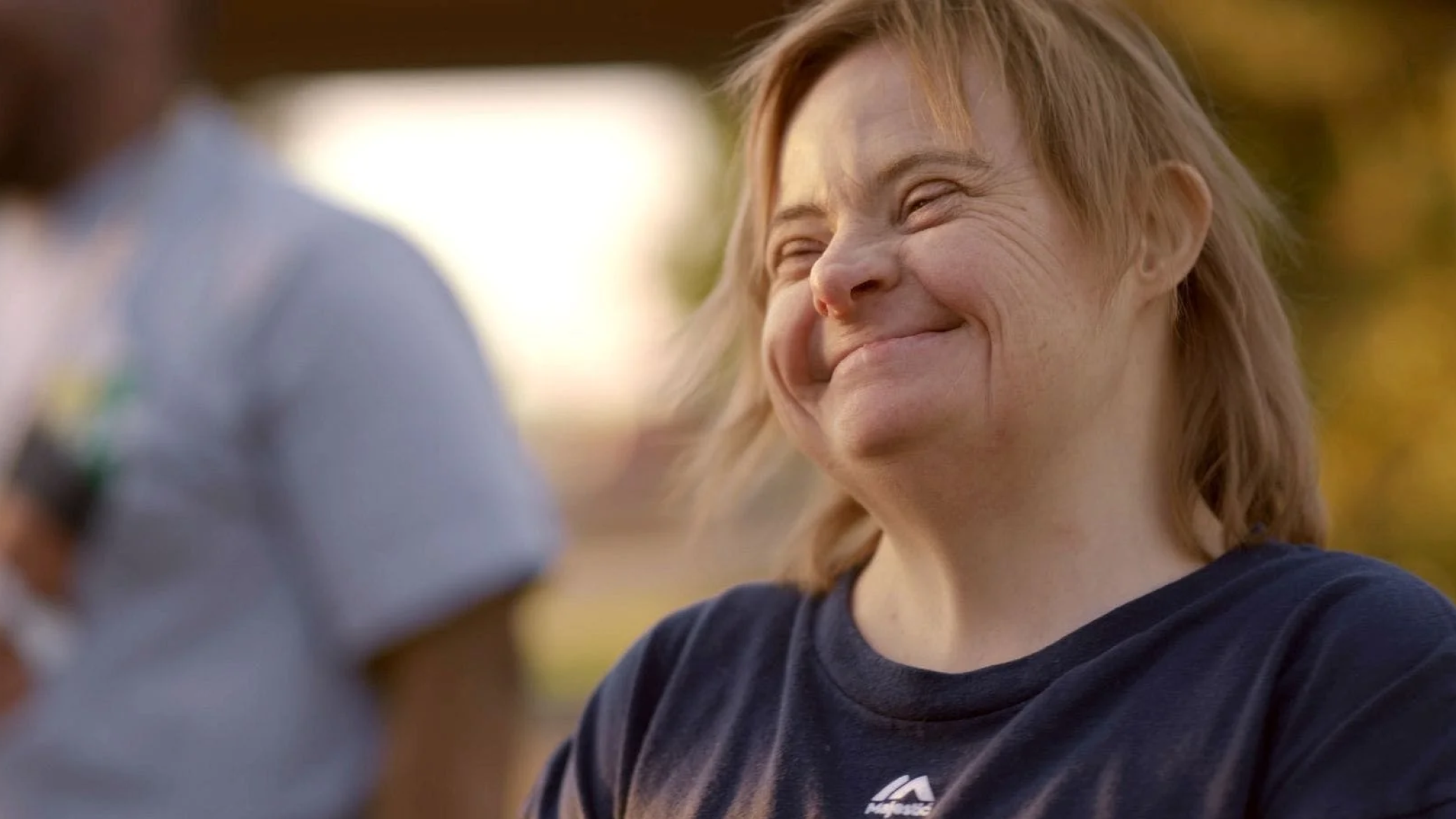
HOPE NETWORK
Structure and strategy for a full-service community wellness organization, connecting 34,000+ Michiganders annually to the services they need.
Context
Hope Network provides social and healthcare services to more than 34,000 people across Michigan each year.
Challenge
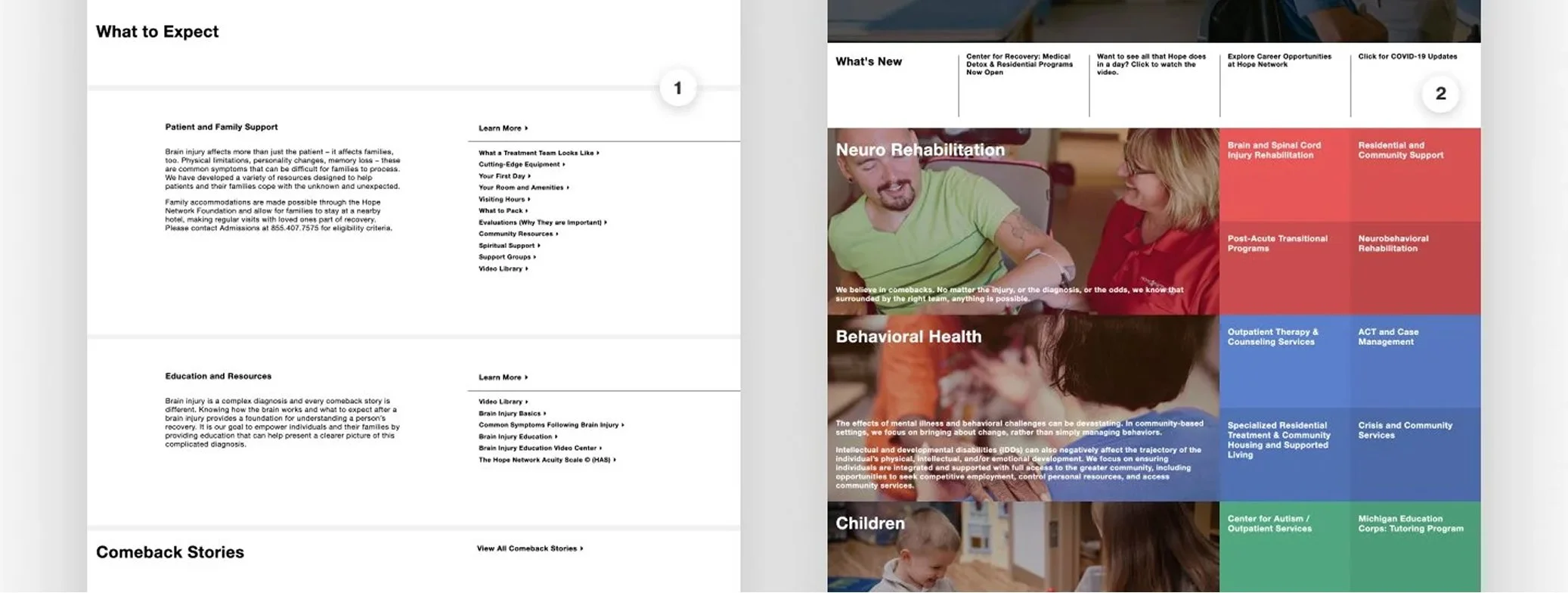
Hope Network needed a full website redesign that connects people in need to its service lines while supporting organizational goals like recruitment, fundraising, and education.
Site Audit
One word described the site: overwhelming. The homepage alone had more than 50 clickable links. Many people turn to Hope Network in times of crisis, so a frictionless, intuitive digital experience could be a first step toward help.
Because Hope Network’s offerings and audiences are vast and varied, we prioritized clarity and organization above all else.
Key Takeaway
Researchers take pride in their instincts, expertise, and craft. The rebuild needed to sharpen their capabilities, not replace their judgment.
The Solution
The research led us to design a two-mode conversational setup, complemented by spaces for sharing prompting methods and insights across teams.
Prompt Library
The Prompt Library gives structure to Lilly’s peer-to-peer learning culture. Users can publish their own methods and best practices for broader adoption.
Insight Library
The Insight Library removes silos around insights generated in Perspective by giving users a place to publish valuable findings.
Interview Space
In the Interview Space, users can query one or more synthetic personas using prompts from the Prompt Library, a discussion guide generated in the Companion Space, or freeform questions.
When valuable insights surface, users can save them flexibly: highlight a single line, save one response, or save every persona’s response at once.
Companion Space
In the Companion Space, users synthesize research into an editable .docx through a user-guided, AI-supported workflow, turning findings into structured, shareable artifacts.

How We Built It
I took an unconventional path, vibe-coding the prototype front to back and working across Cursor and Figma to define design systems, UI patterns, and a source of truth.
Our data and technology strategist built out the tool in parallel as the design took shape, which let us release in a tight three-month timeline.
~$4.9M
Costs saved since launch
2,180
Hours saved since launch
26,000
Responses generated
66
Primary research projects avoided
Outcome